Sometimes it’s just nice to write this stuff down. No agenda. Just thoughts.
Lately I’ve been thinking about how long everything takes to build. I’m fortunate. I have a family I love and something I care deeply about building, but the friction between those two things is real.
One minute I’m reading a bedtime story and the next I’m thinking about prototypes, books, manufacturing, systems, and all the things to do. There’s always this pull to go build. But then I remember something important:
I can always spend more time building. I don’t get this night back.
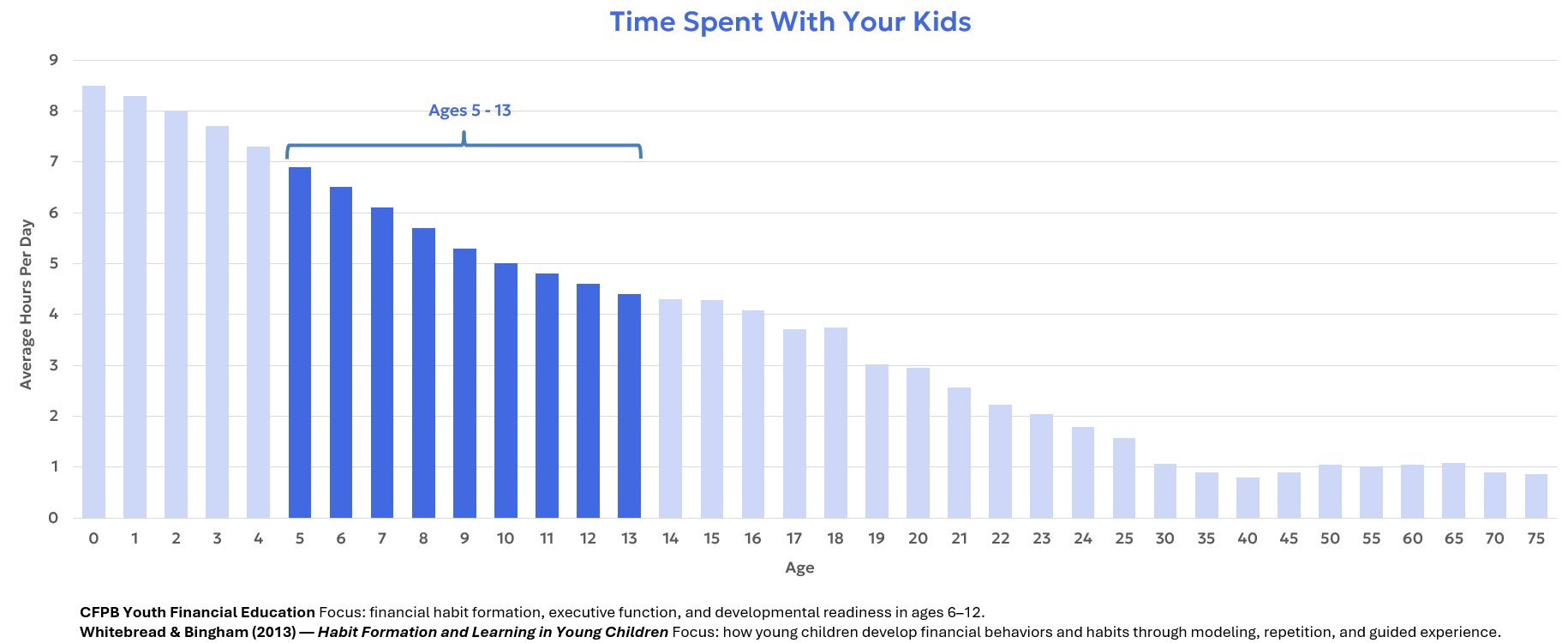
I once saw a visualization showing how much time parents actually spend with their children over a lifetime. Early on, you are their entire world. Then slowly it changes. Less time. More space between moments. Eventually they become adults with lives of their own and your role changes with it.
That visual stuck with me because the same years where children are most curious, imaginative, logical, and eager to participate are also the years where parents still have the greatest influence.
Especially between ages 5 and 13.
Kids at that age already understand more than we give them credit for. They understand waiting, fairness, choice, tradeoffs, scarcity, and reward. They imitate adults constantly. And they are already watching money whether we involve them or not.
They watch you buy groceries, pay bills, save for trips, stress over expenses, and make decisions every day. Money is already part of their world. We just rarely invite them into understanding it.
Instead, we postpone the conversation until “the real world.” I think that’s backwards because by then the world is already teaching them. And the world is not a particularly patient teacher.
Waiting too long to introduce money creates its own risks. We end up expecting young adults to navigate one of the most important systems in modern life after years of limited participation or understanding. Of course mistakes happen.
I’m not talking about turning children into miniature investors. I’m talking about familiarity. How to wait for something. How to think in tradeoffs. How to recover from mistakes. How to make money feel understandable instead of mysterious.
Most parents already understand this instinctively. We hand children crayons before they can draw well, basketballs before they can dribble well, and books before they can read well because we know confidence comes through early interaction.
Money should not be exempt from that idea.
The opportunity to teach these lessons starts earlier than most people think. And the window stays open for less time than we realize.
I hear someone crying. Gotta go.
https://ourworldindata.org/time-use