Hi there.
It’s a little weird to know I can blog here. I used to love free-form creative writing as an undergrad, but it feels different now. Maybe that’s okay. Maybe this is exactly the kind of place where I’m supposed to say what this is really about.
When it comes to money, I think I’ve had an interesting upbringing. Actually, I’ll save that story for another day. Tonight, I want to talk about what this is all about and where this is trying to go. I have two kids, and I am constantly in awe of how much they matter to me. So when I think of my kids futures, I just want the best for them, I want to enable and protect them. I want them to know the world can be a wonderful place, and that if they work hard, there is so much available to them. I do believe that.
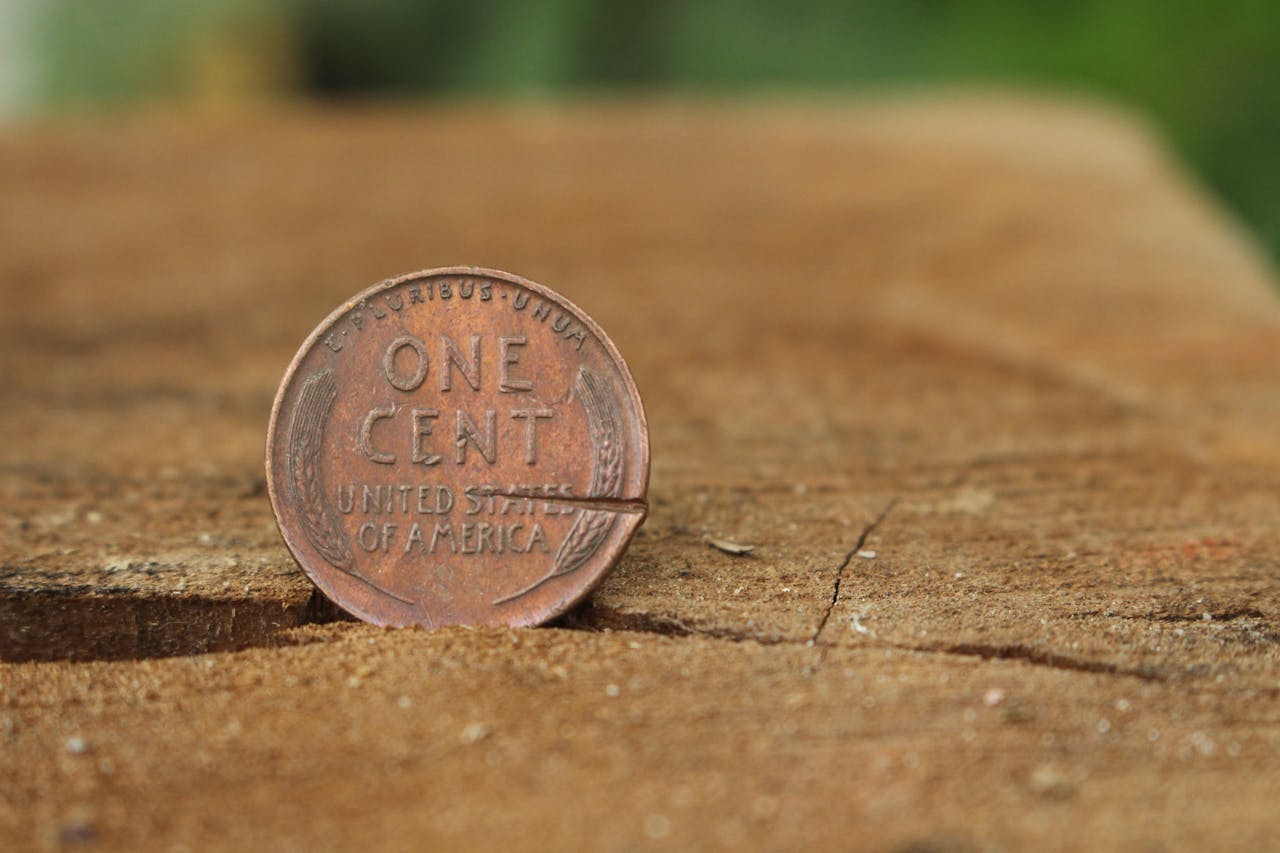
But I was struck by something that seemed small on the surface and wouldn’t leave me alone: on November 12, 2025, the U.S. Philadelphia Mint held the final ceremonial strike for the circulating penny. At first glance, that doesn’t sound like a big deal, right? But what happens when physical currency disappears and everything becomes digital? And maybe even more important: what was physical currency teaching kids before we started moved away from it?
Could I rake a neighbor’s leaves and get paid? Could I sell my skates to buy a bike? Could I collect a few bottles and cans and turn them in to watch them become something else? Could I have a lemonade stand and be handed something physical that gave me the opportunity to think about that hard work and encouraged me to save, earn, sell, appreciate, and buy with my own hard earned money?
I’m not here to say digital money is bad. I actually think it is a very good thing too. But the beginning of oibe came from wanting to make sure kids can still see the value of their own effort. That part unlocked something inside of me.
Young kids are usually too young for abstract financial concepts, but they are not too young to begin building the foundations of financial capability. They can start learning through practice, through repetition, through tradeoffs, through waiting, through earning, through seeing. That critical because so much of money becomes intimidating later precisely because it first shows up as abstraction.
What if kids and adults could practice and play with something that allowed you to learn and develop skills and experiences? Or what if they could grow up with the ability to recognize that some financial tools can look helpful while carrying hidden costs, and that some things that seem intimidating can actually be useful when understood well. You should not need to be a banker, a consultant, or a finance major to understand how money works. You just need a place to learn without shame, without fear, and without feeling like one mistake means you’re behind forever. That's oibe for you.
And yes, I do think education is part of this. We tell kids to dream big, and we often give them real structure around things like music, athletics, language, art, and STEM. That matters. It should. But financial education is still uneven in this country, full stop.
Today, 39 states require some form of personal finance coursework for graduation. That may seem like real progress. But let's be real, not all 39 are doing it equally well, and not all of that learning is delivered through a dedicated standalone course. That distinction matters. Having something on paper is not always the same thing as preparing kids well.
I’m not picking on music when I say this. I’m saying money should matter enough to be taught with that same level of seriousness, repetition, and care. In practice, students are still about 3.5 times more likely to have access to music education than to be guaranteed a personal finance course. I call this out because of all the tropes about a kid being a musician in movies and the parents concerned about it and it's like well why wasn't there more rigor on financial literacy then?
Lastly, I want to name a couple of people who have been inspiring to me, outside of my wife and kids. Jessica and Rod of Lovevery have built an amazing company. If you are reading this with a baby on the way and have never heard of Lovevery, check them out. They’re wonderful, and their play products they make from 0 to 5+ are excellent. I call them out because watching my kids with their boxes made something clear to me: even when I didn’t fully know what to do with something in one of their kits, my kids often did. Their work respects development. It meets kids where they are. It trusts that they are capable.
Through what they built, I could see more clearly where I might be able to add value to families’ lives too at the right age, with the right concepts, at the right time. That’s our goal.
Warmly,
jal
oibe / ceo
________________________
Selected research that inspired oibe -
- Habit Formation and Learning in Young Children (Whitebread & Bingham 2013)
https://mascdn.azureedge.net/cms/the-money-advice-service-habit-formation-and-learning-in-young-children-may2013.pdf - Cognitive Development and Children's Understanding of Personal Finance (Scheinholtz, Holden & Kalish 2012)
https://onlinelibrary.wiley.com/doi/abs/10.1111/joca.12062 - A systematic review of interventions to ameliorate the impact of adversity on brain development (McDermott, Norton & Mackey 2023)
https://www.sciencedirect.com/science/article/abs/pii/S0149763423003603?via%3Dihub - Young Children’s Development of Fairness Preference (Fehr, Bernhard & Rockenbach 2008)
https://pmc.ncbi.nlm.nih.gov/articles/PMC5004411/ - Youth, money, and behavior: the impact of financial literacy programs (Mancone et al. 2024)
https://www.frontiersin.org/journals/education/articles/10.3389/feduc.2024.1397060/full - Media and Young Minds. Pediatrics, 138(5), e20162591. (AAP Council on Communications and Media 2016 - Reaffirmed 2022)
https://publications.aap.org/pediatrics/article/138/5/e20162591/60503/Media-and-Young-Minds - Media Use in School-Aged Children and Adolescents. Pediatrics, 138(5), e20162592. (AAP Council on Communications and Media 2016)
https://doi.org/10.1542/peds.2016-2592 - Is Empiricism Innate? Preference for Nurture Over Nature in People's Beliefs About the Origins of Human Knowledge (Wang & Feigenson, 2019)
https://pubmed.ncbi.nlm.nih.gov/34485789/ - A Cross-Cultural Investigation of People's Intuitive Beliefs About the Origins of Cognition (Meng et al., 2022)
https://pubmed.ncbi.nlm.nih.gov/36438352/ - Intuitive Physics: The Straight-Down Belief and Its Origin (McCloskey et al., 1983)
https://pubmed.ncbi.nlm.nih.gov/6227681/ - Guided Play: Principles and Practices (Weisberg, Hirsh-Pasek, Golinkoff et al., 2016)
https://www.cmu.edu/dietrich/psychology/pdf/klahr/PDFs/Guided%20Play%202016.pdf - The Theoretical and Methodological Opportunities Afforded by Guided Play (Yu, Golinkoff, Hirsh-Pasek et al., 2018)
https://pmc.ncbi.nlm.nih.gov/articles/PMC6057112/ - Young Children Distinguish the Impossible from the Merely Improbable (Stahl & Feigenson, 2024)
https://www.pnas.org/doi/10.1073/pnas.2411297121 - Children weigh equity and efficiency in making allocation decisions: Evidence from the US, Israel, and China. (Choshen-Hillel, Lin, & Shaw, 2020)
https://www.sciencedirect.com/science/article/abs/pii/S016726811930109X - The Development of Inequity Aversion (Shaw, Choshen-Hillel, & Caruso, 2016)
https://journals.sagepub.com/doi/10.1177/0956797616660548